How Credit Unions Can Authentically Lead on Environmental, Social, and Governance Initiatives

In an era marked by growing awareness of global challenges, Environmental, Social, and Governance (ESG) principles have evolved from a niche investment concern to a mainstream expectation for all businesses. For credit union executives, this isn’t merely a trend to acknowledge; it’s a profound opportunity to reinforce their cooperative mission, attract values-driven members, and secure long-term sustainability. While larger financial institutions grapple with complex ESG reporting and often face accusations of “greenwashing,” credit unions, with their inherent focus on community and member well-being, are uniquely positioned to lead authentically and demonstrate tangible impact. There needs to be more emphasis on the ESG Imperative in credit unions to better assist their members in and community.
Environmental Initiatives
ESG integration is about embedding these principles into the very fabric of your credit union’s operations. This extends beyond simple green initiatives to encompass responsible resource consumption within your branches, including energy efficiency upgrades, waste reduction programs, and the procurement of sustainable office supplies. It also involves careful consideration of your supply chain and vendors, ensuring they align with your ethical and environmental standards. By meticulously assessing and improving its operational footprint, a credit union can visibly demonstrate its commitment to environmental stewardship, setting a powerful example for both members and the broader community. This operational alignment not only enhances your reputation but can also lead to significant cost savings through improved efficiency.
Social Initiatives
The “Social” aspect of ESG is where credit unions inherently shine, but there’s always room to elevate impact. This involves deepening your commitment to financial inclusion by developing products and services tailored for underserved communities, promoting financial literacy across all demographics, and fostering a diverse, equitable, and inclusive workplace culture. Furthermore, it extends to your lending practices, exploring opportunities for “green lending” – financing for solar panels, electric vehicles, or energy-efficient home improvements – and supporting local businesses that demonstrate strong social and environmental practices. Your credit union’s community involvement, from volunteering initiatives to local partnerships, already embodies a powerful social mission, and explicitly framing these efforts within an ESG context amplifies their significance and resonance.
Governance Initiatives
Effective Governance, the “G” in ESG, is foundational to ensuring that environmental and social commitments are not just aspirational but actionable and sustainable. This involves transparent reporting, strong ethical leadership from the board and executive team, and clear accountability structures for ESG initiatives. Credit unions can bolster their governance by establishing dedicated ESG committees, integrating ESG metrics into strategic planning, and ensuring that diverse perspectives are represented at all levels of decision-making. Robust governance mitigates risks, fosters investor and member trust, and demonstrates a genuine commitment to long-term value creation that extends beyond quarterly earnings. It ensures that ESG principles are woven into the credit union’s DNA, guiding every decision from risk management to talent acquisition.
In an increasingly conscious market, neglecting ESG is no longer an option. Members, particularly younger generations, are actively seeking financial partners whose values align with their own. Employees, too, are drawn to organizations that prioritize purpose alongside profit. Regulators are also taking a keen interest in how financial institutions manage climate-related risks and social impacts, signaling potential future reporting requirements. For credit union executives, embracing the ESG imperative is therefore a strategic advantage that enhances reputation, strengthens member and employee loyalty, positions the institution favorably against competitors, and ultimately contributes to its long-term financial health and relevance in a world that increasingly values responsibility and impact.
Is Your Credit Union Ready to Lead on ESG?
A strong commitment to ESG starts with a solid foundation. As you innovate and expand your mission, ensure your operational processes and member interactions are seamless and compliant. Oak Tree Business Systems is your trusted partner for meticulously crafted, compliant credit union membership forms and comprehensive consumer lending documents, designed to support your growth while maintaining regulatory excellence.
Credit Unions and Sustainable Finance
The Role of Credit Unions in Promoting Sustainable Finance

As cooperative financial institutions, credit unions are uniquely positioned to promote sustainable finance. By aligning their operations with environmental, social, and governance (ESG) principles, credit unions can contribute to a more sustainable future. As credit unions take on the responsibility to help their communities and the future they may have it is important to look into the importance of credit unions and sustainable finance as it impacts their members and prospective members.
One of the most significant ways credit unions can promote sustainable finance is through sustainable lending. This involves providing loans to businesses and individuals engaged in environmentally friendly practices, such as renewable energy projects, energy-efficient housing, and sustainable agriculture. Credit unions can help reduce carbon emissions and promote sustainable development by supporting these initiatives.
Another important aspect of sustainable finance is responsible investing. Credit unions can invest in companies prioritizing ESG factors, such as reducing their carbon footprint, promoting diversity and inclusion, and ethical business practices. By investing in sustainable companies, credit unions can generate positive social and environmental impacts while achieving financial returns.
Furthermore, credit unions can play a crucial role in educating and empowering their members to make sustainable financial choices. By offering financial literacy programs that focus on sustainable living, energy efficiency, and responsible consumption, credit unions can help their members reduce their environmental impact.
While implementing sustainable finance initiatives may require additional resources and expertise, the long-term benefits are significant. By embracing sustainability, credit unions can enhance their reputation, attract environmentally conscious members, and contribute to a more sustainable future.
Sustainability and Your Credit Union
Why Sustainability is the Cornerstone of a Thriving Credit Union
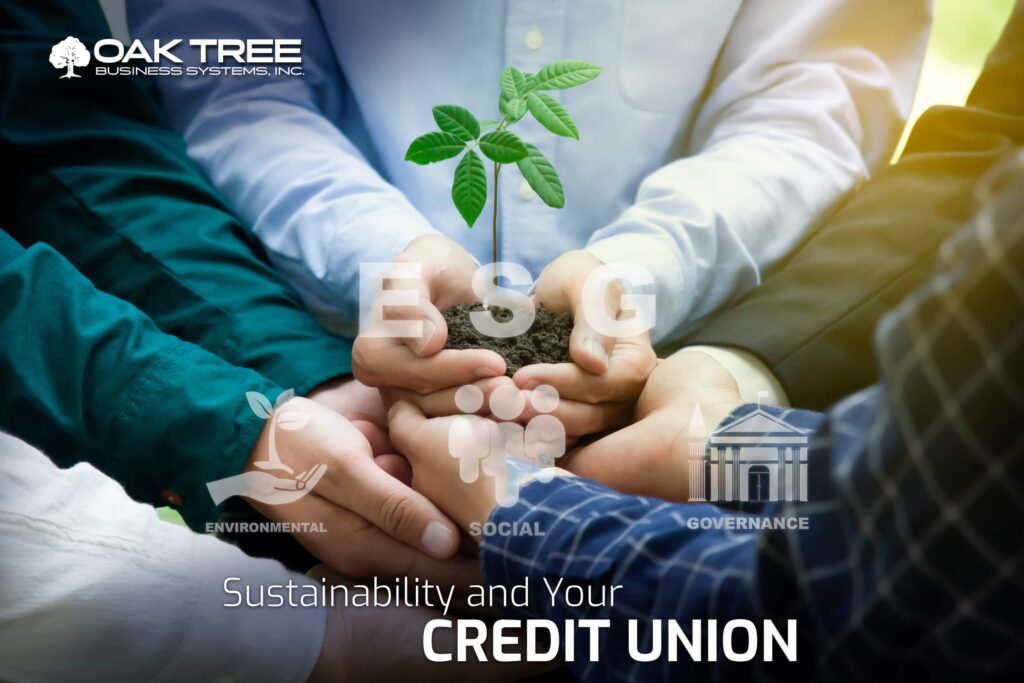
The landscape of priorities is shifting. Today’s members are not only concerned about financial well-being, but also the environmental and social well-being of their communities. Sustainability, once a buzzword, has become a critical business imperative for credit unions. It’s more than just a trendy talking point; it’s a strategic opportunity to differentiate yourself and solidify your position as a trusted partner in building a more sustainable future. Greener pastures for credit union futures come from sustainable practices developed today. That is why we want to discuss sustainability and your credit union.
Beyond Compliance: A Holistic Approach
Sure, regulatory compliance is important. But viewing sustainability solely through that lens is shortsighted. The true value lies in proactively integrating environmental, social, and governance (ESG) factors into the very fabric of your credit union. This means moving beyond checking boxes and fostering a culture of conscious banking.
Internal Transformation: Leading by Example
The journey begins at home. Your credit union can significantly reduce its environmental footprint by implementing energy-saving practices, investing in renewable energy sources, and minimizing paper waste. These efforts not only benefit the environment but also send a powerful message to your members and employees.
Empowering a Sustainable Workforce
Employees are the backbone of any organization. Providing training and resources on the importance of sustainability empowers them to become active contributors to your green initiatives. This could involve anything from integrating sustainability considerations into loan applications to promoting eco-friendly practices in the workplace.
Engaging Members: Building a Sustainable Future Together
Your members are your most valuable asset. Offer financial products that align with their values, such as green loans for energy-efficient home improvements or eco-friendly investment options. Partner with local sustainability organizations and encourage member participation in community projects. Most importantly, educate your members on the connection between their financial choices and environmental impact.
Building Trust Through Transparency
Transparency is key to building trust with your members. Measure and track your progress on ESG goals, and share those results openly. Create platforms for members to voice their concerns and suggestions related to your sustainability efforts. This open dialogue fosters trust and allows you to continuously improve your initiatives.
Collaboration for Collective Impact
Credit unions are stronger together. Collaborate with industry peers to share best practices and learn from each other’s experiences. Advocate for collective action within the credit union sector to create a more significant impact on sustainability efforts.
Sustainability: More Than Just Going Green
Embracing sustainability isn’t just about saving the planet; it’s about safeguarding the long-term success of your credit union. Here’s how:
- Attract a New Generation of Members: A commitment to ESG principles resonates with a growing demographic of environmentally conscious consumers.
- Enhance Your Reputation: Sustainability strengthens your positive image as a socially responsible organization.
- Mitigate Financial Risks: Climate change poses financial risks. Sustainable practices can help reduce your exposure to these risks.
- Drive Innovation: Sustainability fosters innovation, leading to the development of new products and services that cater to evolving member needs.
- Attract Top Talent: Your commitment to sustainability will attract a talent pool that aligns with your values.
The Time to Act is Now
The future belongs to those who embrace change. As credit union leaders, you have the power to shape a more sustainable future. By prioritizing sustainability, you can ensure your institution’s financial resilience, create a positive ripple effect in your community, and be a leader in building a brighter tomorrow. Remember, sustainability is not just a possibility; it’s a responsibility. Let’s cultivate a future where financial prosperity and environmental well-being go hand in hand. Let’s make our credit unions beacons of sustainability, shining a light on a brighter tomorrow for all.