Navigating the Evolution of Financial Technology
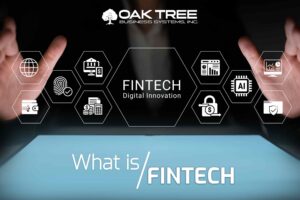
The intersection of finance and technology is reshaping how institutions deliver value, manage risk, and interact with member-owners. For decision-makers steering cooperative financial institutions, keeping pace with these changes requires looking beyond the buzzwords to understand the historical context, current operational uses, and trajectory of modern financial tools. So, let’s go past just the basic answer of “what is fintech?”
What is Financial Technology?
At its core, financial technology—widely known as fintech—refers to the application of advanced software, digital platforms, and automated systems to improve and automate financial services. Rather than replacing traditional institutional values, modern financial technology serves as an operational multiplier. It bridges the gap between consumer expectations and legacy administrative systems, creating streamlined pathways for lending, deposits, and daily account management.
A Brief History: From the Telegraph to Cloud Architecture
While contemporary discussions often treat financial technology as a recent phenomenon, its roots stretch back over a century.
- The Infrastructure Era:The foundational mechanics of electronic finance began with late 19th-century telegraph networks and the establishment of early electronic wire transfers through Fedwire in 1918.
- The Digital Transition:The mid-to-late 20th century introduced consumer-facing automation, including the first credit cards in the 1950s, the introduction of Automated Teller Machines (ATMs) in 1967, and the launch of digital exchanges like NASDAQ in 1971.
- The Modern Transformation: Following the 2008 global financial crisis, rapid smartphone adoption and cloud computing catalyzed a new wave of agile, software-driven platforms. This shift forced institutions of all sizes to rethink how digital user experiences are designed and delivered.
Application Within the Cooperative Financial Sector
For credit unions, utilizing financial technology is no longer optional; it is essential for maintaining relevance among members who expect seamless digital interactions. Current applications focus heavily on efficiency and accessibility:
- Digital-First Onboarding: Allowing new members to join, verify identity, and fund accounts entirely through mobile devices without visiting a physical branch.
- Advanced Lending Automation: Utilizing automated decisioning engines to speed up loan approvals while maintaining strict underwriting standards.
- Data Analytics and Personalization: Leveraging transaction data to offer targeted financial wellness advice, customized savings products, and relevant lending offers to specific demographic segments.
What Does the Future Look Like?
Looking ahead, the next evolution of financial technology will be defined by integration, security, and artificial intelligence. Rather than competing with agile tech startups, forward-thinking credit unions are increasingly partnering with technology vendors through secure API integrations.
Emerging trends point toward hyper-personalized member service, where predictive analytics help financial institutions anticipate a member’s borrowing or savings needs before they even ask. Furthermore, robust cybersecurity frameworks and automated compliance tools will remain central as digital transactions scale.
The Strategic Takeaway
For executive leadership and strategic planners, treating technology as a core component of institutional growth ensures long-term viability. By understanding where financial technology came from and how it integrates into daily operations, cooperative institutions can continue to scale their impact while staying true to their foundational mission of community service.
Fintech & Your Credit Union
Fintech is a Concern to Credit Unions

Fintech, or financial technology, is the use of technology to provide financial services. Fintech companies are using innovative technologies to disrupt the traditional financial services industry, and credit unions are no exception. What do you know about fintech and your credit union?
Fintech companies can offer lower fees, more convenient services, and a better user experience than traditional financial institutions. This is making it difficult for credit unions to compete, and it is causing some members to switch to fintech companies.
In addition, fintech companies can innovate more quickly than traditional financial institutions. This is because they are not bound by the same regulations, and they do not have the same legacy systems. This gives them a competitive advantage, and it is making it difficult for credit unions to keep up.
Predictions for the Future
The trend of fintech disrupting the financial services industry is likely to continue in the future. This means that credit unions will need to find ways to adapt to the changing landscape to survive.
Some of the ways that credit unions can adapt to the rise of fintech include:
- Partnering with fintech companies to offer their members access to innovative financial services.
- Investing in new technologies to improve their services and make them more competitive.
- Focusing on providing excellent customer service to differentiate themselves from fintech companies.
How Credit Unions Can Stay Aware of Compliance Issues with Fintech
Fintech companies are often not subject to the same regulations as traditional financial institutions. This means that they may be more likely to engage in risky behavior, such as fraud or money laundering.
Credit unions that partner with fintech companies need to be aware of the potential risks and take steps to mitigate them. Some of the ways that credit unions can stay aware of compliance issues with fintech include:
- Conducting due diligence on fintech companies before partnering with them.
- Monitoring the fintech company’s activities for any signs of suspicious activity.
- Having a clear understanding of the fintech company’s compliance policies and procedures.
By taking these steps, credit unions can help to protect themselves from the risks associated with fintech.
Fintech is a significant challenge for credit unions, but it also presents an opportunity. Credit unions that are able to adapt to the changing landscape and partner with fintech companies can thrive in the future. When it comes to adaptation to the changing banking landscape you can trust Oak Tree with your documents and forms!
Fintech Friction

Originating in 1866, Fintech came about when the very first transatlantic cable was laid. From 1950-1990, five decades of financial technological developments came with having to do with credit cards, ATMs, trading, computers, and data systems. As years went on and technology started becoming more advanced, new developments came along to help banks stay up to date with the new changes. When systems are not planned it can create some fintech friction.
In today’s world, it is imperative to have a system that is up to date (made necessary by advancing technologies that are becoming easier for users to navigate), and a system with fewer clicks, known as a “3-click rule.” A huge consideration when taking on the role of making sure that everything is running smoothly is to ensure that the system is performing in a fast and efficient manner. When people are trying to browse through an application on their phones and the application is difficult to maneuver, they will likely get frustrated and click out of the app, or they may even delete it. We need to remember that today we tend to get impatient when an application or web browser takes more than a few seconds to load correctly. This has to do with how technology advancements are conditioning us to have “unrealistic” time-slot expectations.
A Forbes blog states, “Waiting doesn’t seem effortful, but it is still friction. Even a short wait may prevent the desired action. Waiting adds uncertainty and increases anxiety when the exact delay is unknown. Given an arrival window of “8 AM to 4 PM” for the cable repair person, how do you feel at 3 PM when they have yet to arrive?” Talking business, when customers are scrolling through their accounts or a forms document, they are expecting the process to be fast and easy. Our daily schedules are hectic, and if we have to spend 20 minutes on a forms application, then we may rethink the task we were planning on completing. Not only is having top-of-the-line technology important for your credit union, but it also allows your institution to provide easy access to all of the products and services you offer your members. Members are accessing apps with a certain goal in mind, or they could just be curious about the credit union. Making sure the app or website is efficient, clean, put together, and up to date will allow for great satisfaction and an awesome customer experience.
Looking deeper into this topic, there are many different mortgage companies supposedly “taking power” from other financial institutions. Whoever is in need of a loan should research to see which company provides the most benefit, who will pay more attention to each potential member walking through the business’s doors, and what goals are their members or potential members trying to achieve. Some things a financial institution needs to think about before a member applies for a loan: Is the loan process long? What kind of information will be requested? How will the credit union provide information (over the phone or in person)? All of these questions need to be thought through. Credit unions make the process easy, efficient, and fast. Staff members care about every single person who walks through the company’s doors. With a smaller pool of members than other financial institutions (due to field of membership requirements), customer service and customer satisfaction are a huge responsibility for every staff member. Providing the best loans for their members and having someone on the phone and in person to chat about any questions or concerns will always be a guarantee.
When it comes to banks and mortgage companies, their pool of members is very wide. This can and will result in not paying enough attention to each member’s needs, and the bank will try to get their money back from the loan as fast as possible. Interest rates are a major factor in getting their money back AND making a profit, [sic] “A “nonbank” can be seen as a financial intermediary. Instead of depositors, a nonbank gets its funds from investors, debt (via bond sales), or by borrowing from commercial banks. It takes that money and loans it to borrowers. The fees and interest collected — as well as principal repayments — are then used to repay the capital with interest.” The Simple Dollar
Oak Tree Business Systems, Inc. has been in the credit union industry for over 40 years. We have developed, supported, and maintained lending/operational documents for credit unions in over 50 states, including Puerto Rico and the Virgin Islands. Not only are we efficient, but we work with you to create forms that accommodate your credit union’s technology objectives and facilitate a smooth workflow. These documents are easy to use, are specifically designed to match your credit union’s policies and procedures and work hand in hand with your data/loan processing system. Our compliant forms and marketing services are at the top of the credit union game. Oak Tree wants your credit union to feel secure in the forms you provide your members, so please let us know how we can help! Let’s avoid the fintech friction.