There appears to be a lot of remodeling going on lately in the credit union world.
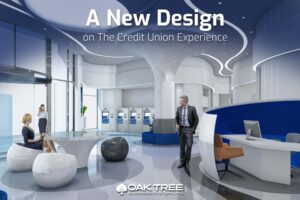
Gaining momentum is a new kind of member experience for those who conduct business within a brick-and-mortar credit union. With the help of modern builders and interior decorators, quite a few credit unions are opting to give their lobbies and other interior spaces a new style, embracing a well-received design-forward approach. So, what is a “design-forward credit union,” and how is it a new design on the credit union experience? It comes down to emphasizing the use of design to create solutions that will anticipate the future needs and challenges of the branch and not just the current ones. It prioritizes innovation, strategic thinking, and a forward-looking perspective. For many credit unions, it is about finding better solutions to the design and layout of the branch for how business is done today, instead of a hundred years ago.
CUSTOMIZATION IS KEY
Some credit unions are adopting a relaxed, comfortable living-room atmosphere, while others are adorning the space with hometown memorabilia for a familiar, homey feel. Still, more are going for abstract, colorful, and bright features to create a museum or art gallery experience while waiting for service. When called forward, some members are treated to a plush chair to relax into, while making transactions across a heavy oak or sleek glass desk instead of the usual walk-up counter.
Depending on the individual credit union, this undertaking wisely tends to customize the design to complement the surrounding area, and/or cater to the demographic of member culture and age groups—essentially tailoring the service to enhance the member experience.
Based on current renovations, some of the strategic elements of these designs can include:
- Smaller branches with a focus on personalization and efficiency, which can lead to cost advantages
- Open layouts featuring “pods” or “stations” (rather than the traditional teller line), reducing physical barriers and promoting an inviting, trust-building atmosphere
- Live plants used as partitions to divide areas, and natural or warm lighting to create a “stay-awhile” vibe
- Comfortable, stylish lounges and seating areas
- Flexible plans that can be reconfigured for multiple purposes, such as open areas for swift transactions or smaller rooms for more private meetings
- Effortless traffic flow and practical layout of working spaces
- Self-service stations for quick, independent tasks
- Digital signs for rotating information, promotions, and brand messaging
- Enhanced accessibility and ergonomic components
BRANCHING OUT OF TRADITION
Some branches have even embraced “co-branding” by providing space for other retail companies to offer unrelated services or products (like food or beverages). In this type of atmosphere, members can feel free to get chatty with each other while standing in an informal queue to wait their turn. Time might pass more pleasantly in this environment, eliminating the restless need to keep checking a watch while waiting to hear the anticipatory “Next!”
A POSITIVE LOOK FORWARD
The overall takeaway from this design trend seems to be “comfort meets efficiency with style.” Aesthetic appeal is essential to the design: to represent the surrounding community and be inviting to the person who walks in the door. You could even say that “design-focused” translates to member-focused. And isn’t that what a credit union is all about? Look at your members and your community to be the inspiration for your new credit union interior, and when you sign those new members, remember we are the ones with the design-forward credit union documents and forms.